
What is colour drenching and can I make it work in small rooms?
Colour drenching is an interior design technique where one colour is used across walls, ceilings, woodwork, and sometimes furniture to create a rich, immersive, unified look and has to be one of the defining interior trends of the 2020s. First noticed in 2021, by 2023 it was really taking off and now it’s everywhere, widely labelled as one of the biggest interior trends, especially driven by social media and designers embracing bolder, immersive colour schemes.
Colour drenching in small rooms
In a traditional scheme, you might have white ceilings, contrasting skirting, a different wall colour and perhaps a bare wood door. Every change in tone creates a line that chops up the space and reminds you of its limits. With colour drenching, those lines all but disappear. Walls, ceiling, skirting, doors and sometimes radiators or built-ins are painted in the same hue, or in very closely related shades, so the eye has nothing to “stop” on. The result is unexpectedly calming and, in many cases, visually enlarges a small room.
Small rooms are perfect candidates for this approach because they tend to have the quirks you want to downplay. A low ceiling, a staircase bulkhead, too many doors or a short run of wall behind a bed all stand out starkly when they are picked out in white against a coloured wall. Wrap them in a single shade and they recede into the background. Rather than trying to pretend a tiny room is something it is not, colour drenching leans in and turns it into a jewel box.
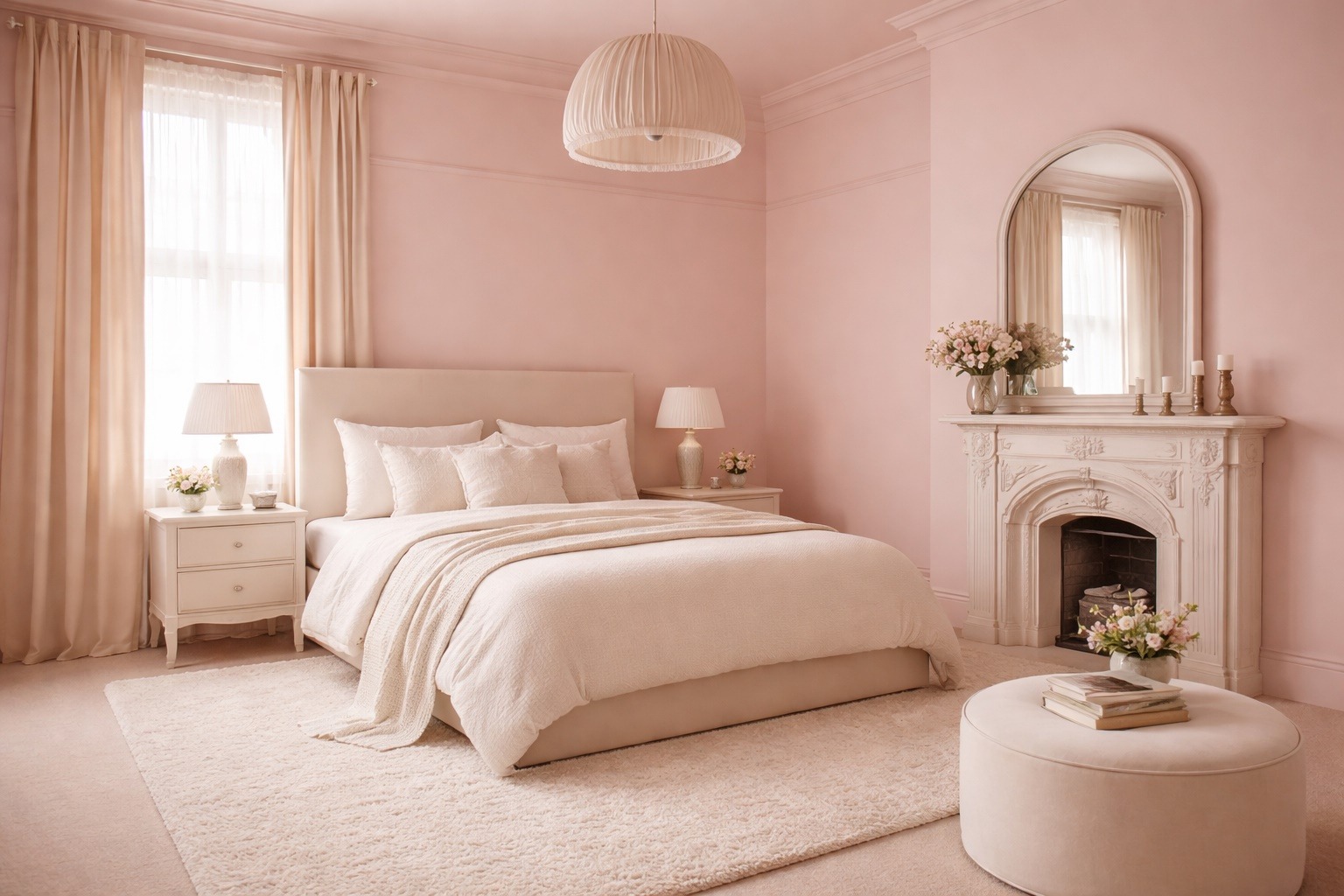
Bedrooms are an easy place to start. In a compact guest room or child’s room, choose a warm, mid‑tone colour such as terracotta, mustard, plaster pink or tobacco. Take it over the walls, ceiling, skirting and door, then bring the same shade onto the bedhead or a painted bedside table. Because everything sits within one colour envelope, the room feels cohesive and cocooning, not busy. This is particularly effective where a bed has to sit under a sloping ceiling or against off‑centre windows, as the uniform colour makes those compromises less apparent.
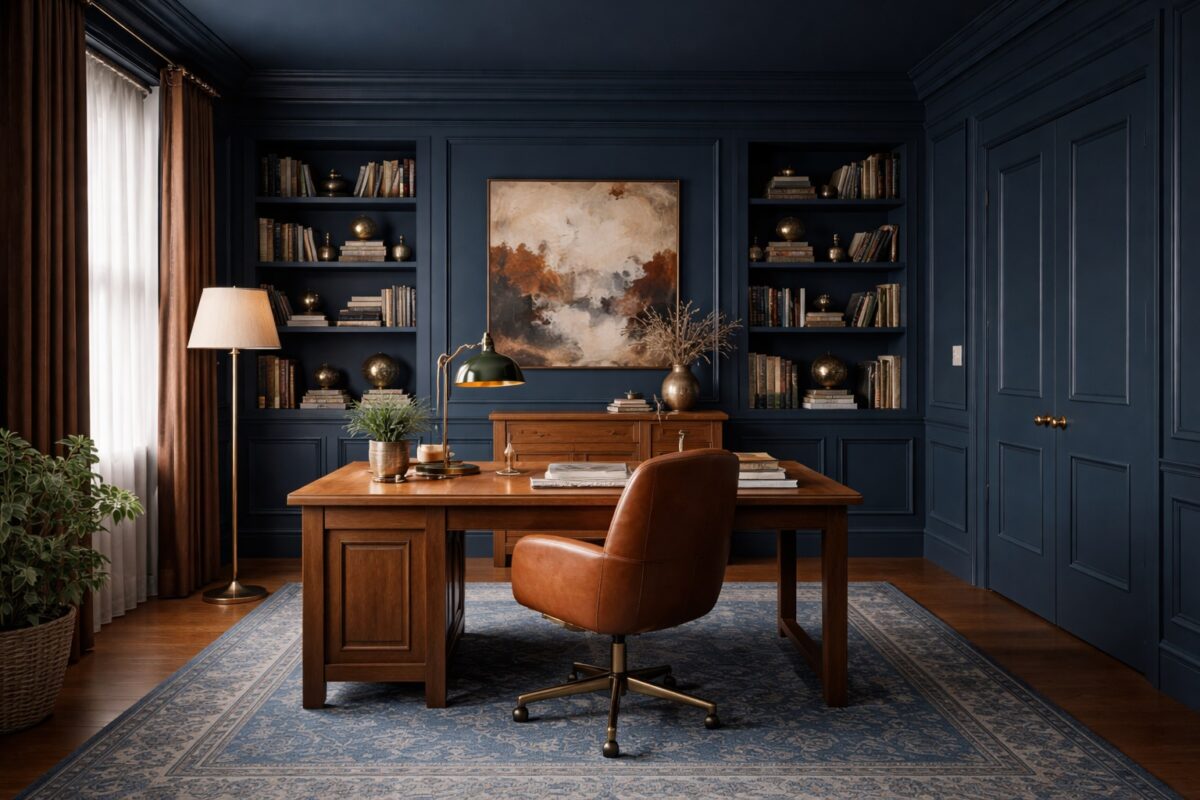
Deep, saturated shades also work brilliantly in small studies and box rooms. An inky navy, bottle green or aubergine wrapped around all four walls and the ceiling can make a tiny home office feel purposeful and snug rather than poky. Built‑in shelving, radiators and even the inside of the door can all be brought into the same colour to blur boundaries further. If you worry about a full “colour cave”, try using the main shade on walls and joinery, with a slightly lighter tonal variant on the ceiling for subtle lift.
Hallways and landings benefit from colour drenching too. Circulation spaces in British homes are often narrow, interrupted by many doors and flooded with hard‑edged white gloss. Painting doors, frames, skirting and walls in one soft neutral or gentle colour immediately calms the look. The corridor feels more like an intentional space and less like a leftover strip connecting rooms. A matt finish keeps it sophisticated, while a satin or eggshell on woodwork adds a little light play without re‑introducing harsh contrast.
For the bold, the downstairs loo and tiny bathrooms are the ideal testing ground. Because these spaces are used in short bursts, they can take strong pigments like emerald, peacock blue or cassis without feeling overwhelming. When every surface, including the ceiling, is enveloped in colour, sanitaryware and brassware stand out as sculptural elements. You can push the idea further with a “double drench”, using two close shades of the same colour family to pick out panelling or a vanity, while still maintaining that wrapped, immersive feel.
Top tips for colour choices
A few practical points help colour drenching succeed in small rooms. First, consider light. North‑facing spaces often suit warmer tones to avoid looking flat, while south‑facing rooms can handle moodier hues. Second, pay attention to sheen. High gloss everywhere will feel intense; instead, stick to matt on walls and ceiling, with eggshell or satin on woodwork for a gentle shift in reflectivity. Finally, keep furnishings and textiles simple. You do not need to go neutral, but if the envelope is strong, allow some breathing space with natural textures, a limited palette and considered pattern so the overall effect feels deliberate rather than chaotic.
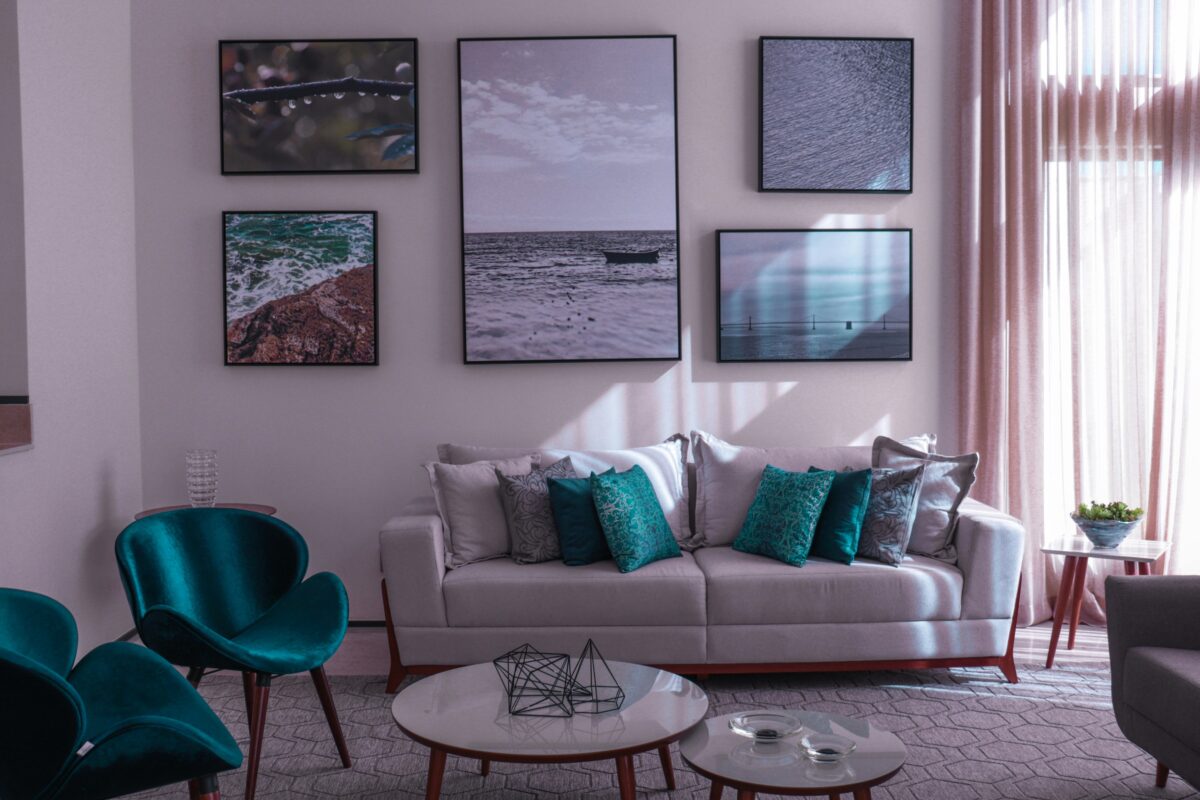
Handled well, colour drenching is less about being “brave” and more about being coherent. By stripping back contrast in a small room and committing to a single, enveloping shade, you can turn awkward square footage into the most atmospheric, talked‑about space in the house.
Eddie – Friday 20th March 2026.