
Period Homes in Chorlton: 7 Things to Consider Before Replacing Original Sash Windows..
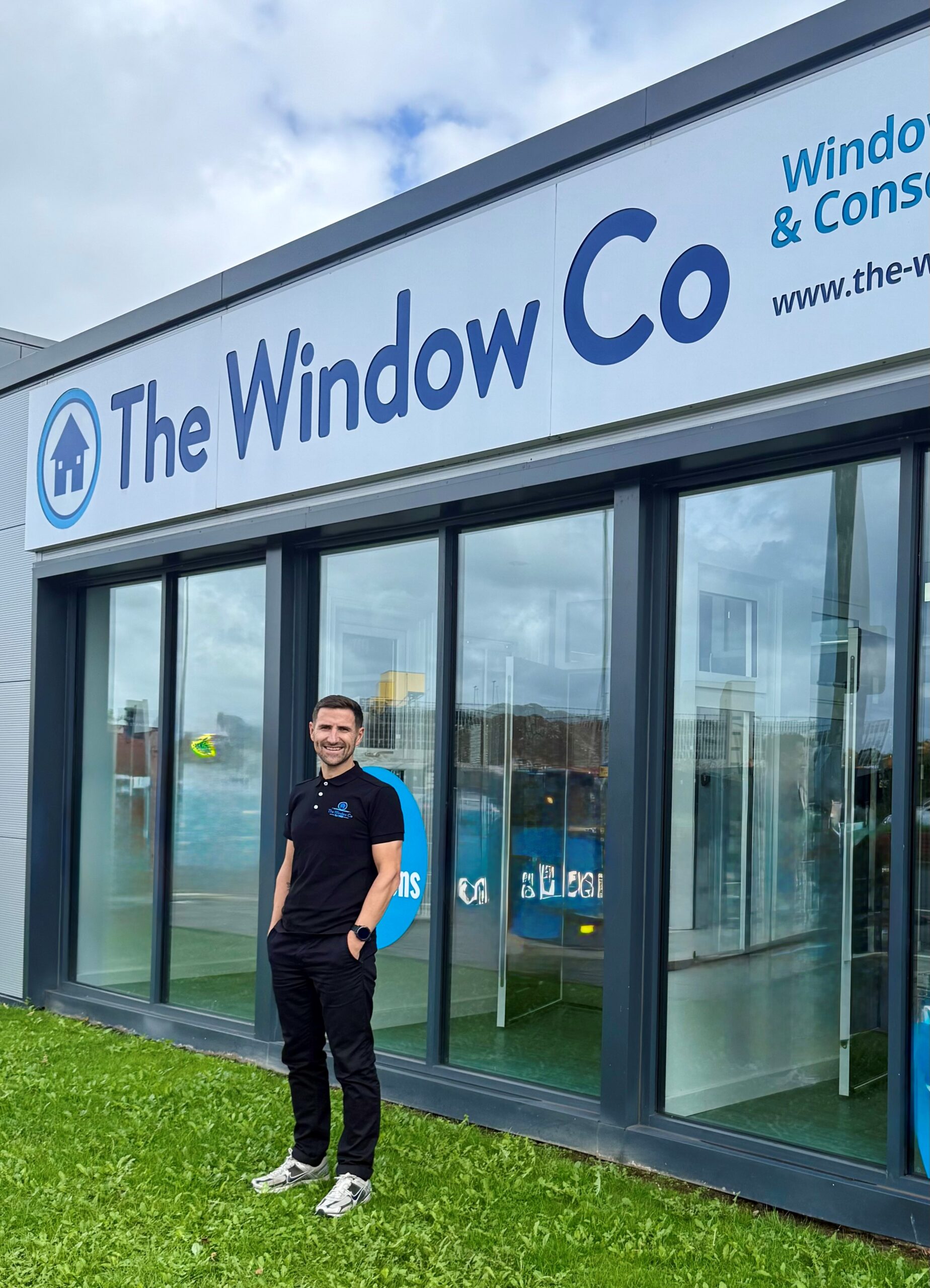
By Wayne Shaw, Managing Director of The Window Company
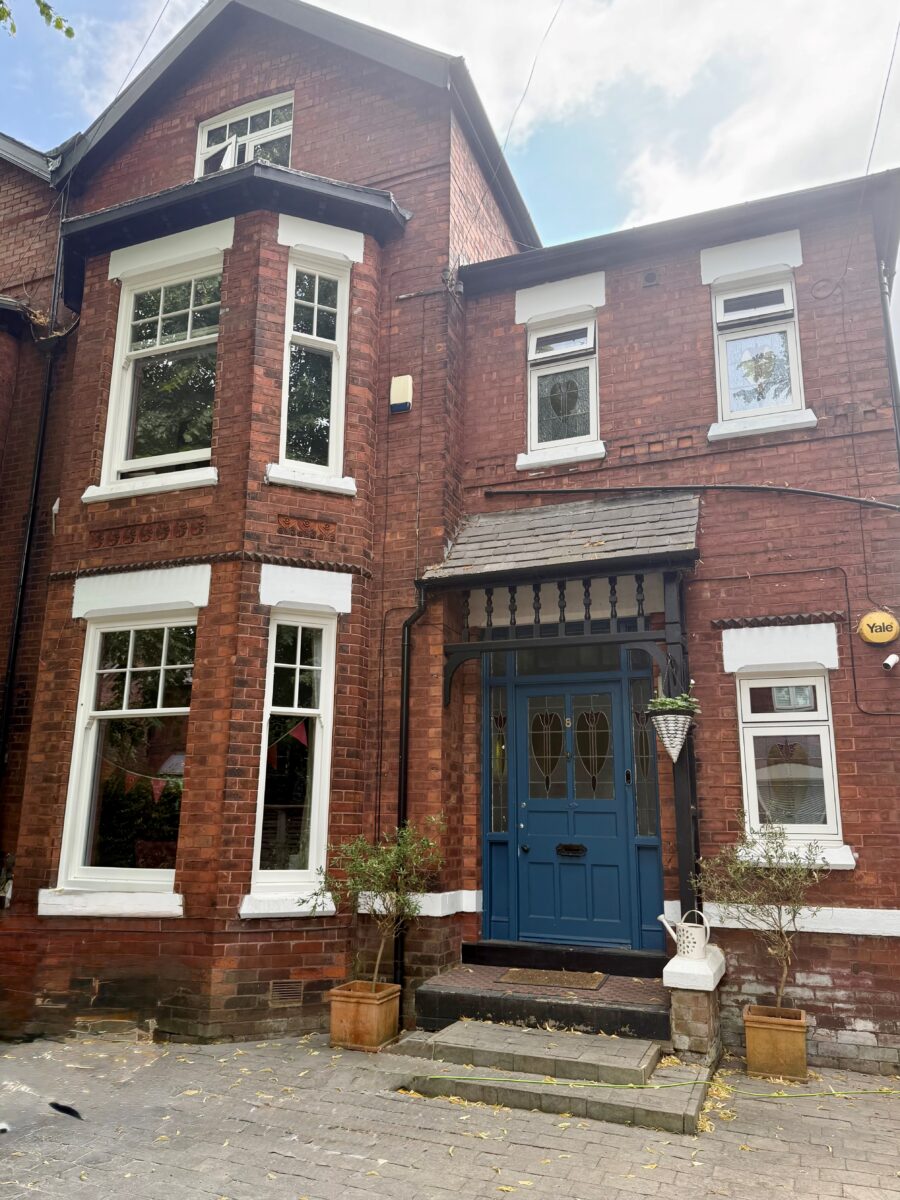
Chorlton has some fantastic period homes, and for many homeowners the features that give those houses their character are a big part of the reason they bought them in the first place.
Original sash windows, stained glass, bay windows, internal joinery and traditional proportions all contribute to the appearance of a property.
The problem is that those original features also eventually need maintaining or replacing.
I’ve worked at The Window Company for more than 26 years, and the business has been fitting windows and doors across South Manchester since 1988.
One of the challenges we regularly come across in areas such as Chorlton is helping homeowners improve the comfort, security and practicality of an older property without unnecessarily taking away the details that make it special.
A recent project for a homeowner called Romy is a particularly good example.
Romy had only recently moved into her period home in Chorlton. The original timber sash windows were single glazed, badly deteriorated and had areas of rot and even holes in places. Some of the windows could no longer be opened.
Replacing them was clearly necessary.
The important question was how to replace them without making the house suddenly look as though it had lost its original windows.
Here are seven things I’d consider if you own a period property and are facing a similar decision.
1. Decide which original features actually matter
Before choosing a replacement window, look carefully at what is already there.
Not everything old automatically needs preserving, but there may be individual details that contribute significantly to the property.
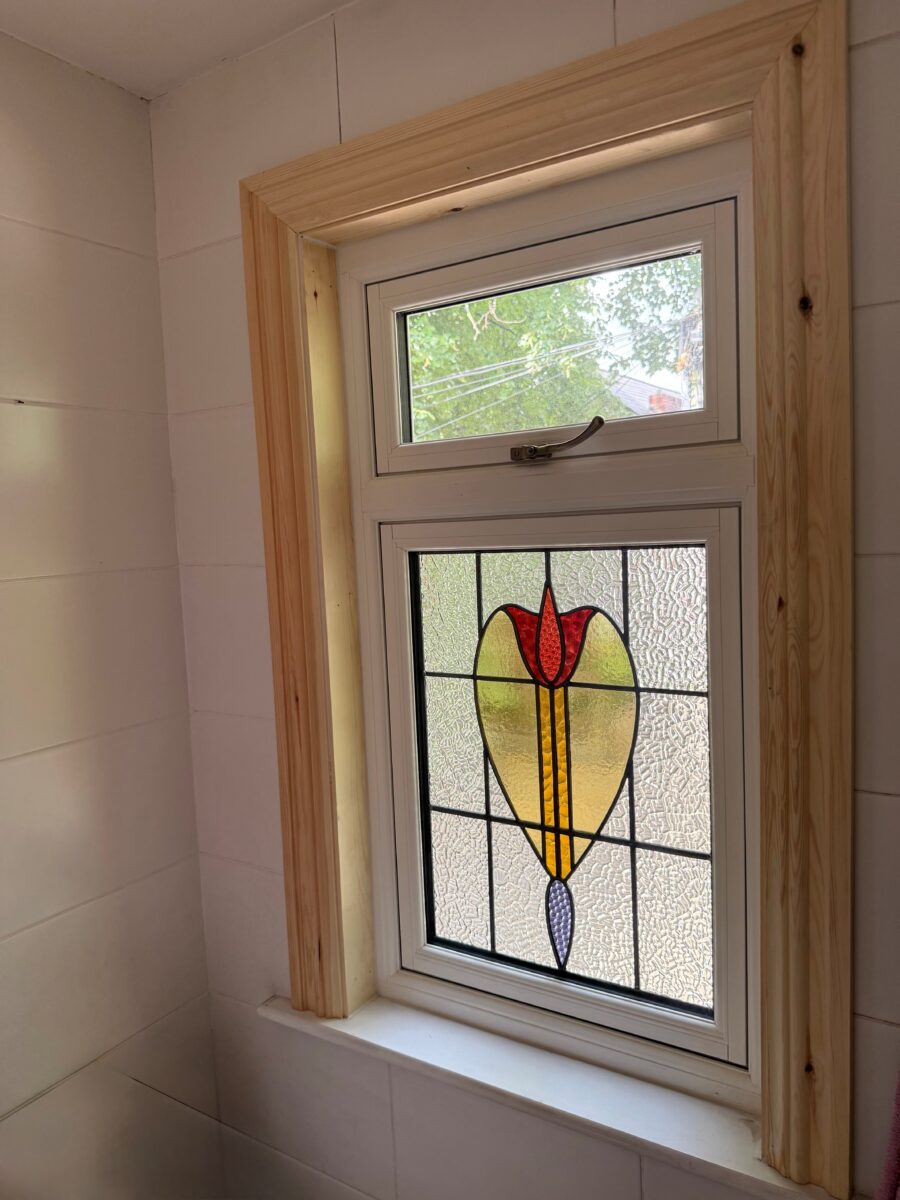
On Romy’s house, one of those features was the original stained glass.
Rather than removing it as part of the window replacement, we were able to retain it and encapsulate the original glass within the new glazing.
That meant the homeowner could move to modern double glazing while keeping an original feature of the house.
I think this is an important starting point with any period renovation.
Ask yourself:
Which features give this house its character, and which of those could realistically be retained?
2. Don’t assume modern uPVC means losing the traditional appearance
There can still be a perception that replacing timber windows with uPVC automatically means installing chunky white frames that look completely different from the originals.
Modern sash windows can be very different.
For this particular Chorlton project we recommended Roseview uPVC sash windows to the front of the property.
Romy had researched the options carefully and wanted something that came as close as possible to the appearance of the original timber sash windows.
The aim wasn’t to make the property look newly double glazed.
It was to give her the advantages she wanted from a modern window while retaining the traditional proportions and sash appearance of the house.
3. Compare the installation method, not just the window
This is one of the biggest things I’d encourage homeowners to ask about.
Romy obtained eight different quotations before choosing a company.
There was a considerable difference between the products, prices and installation methods being suggested.
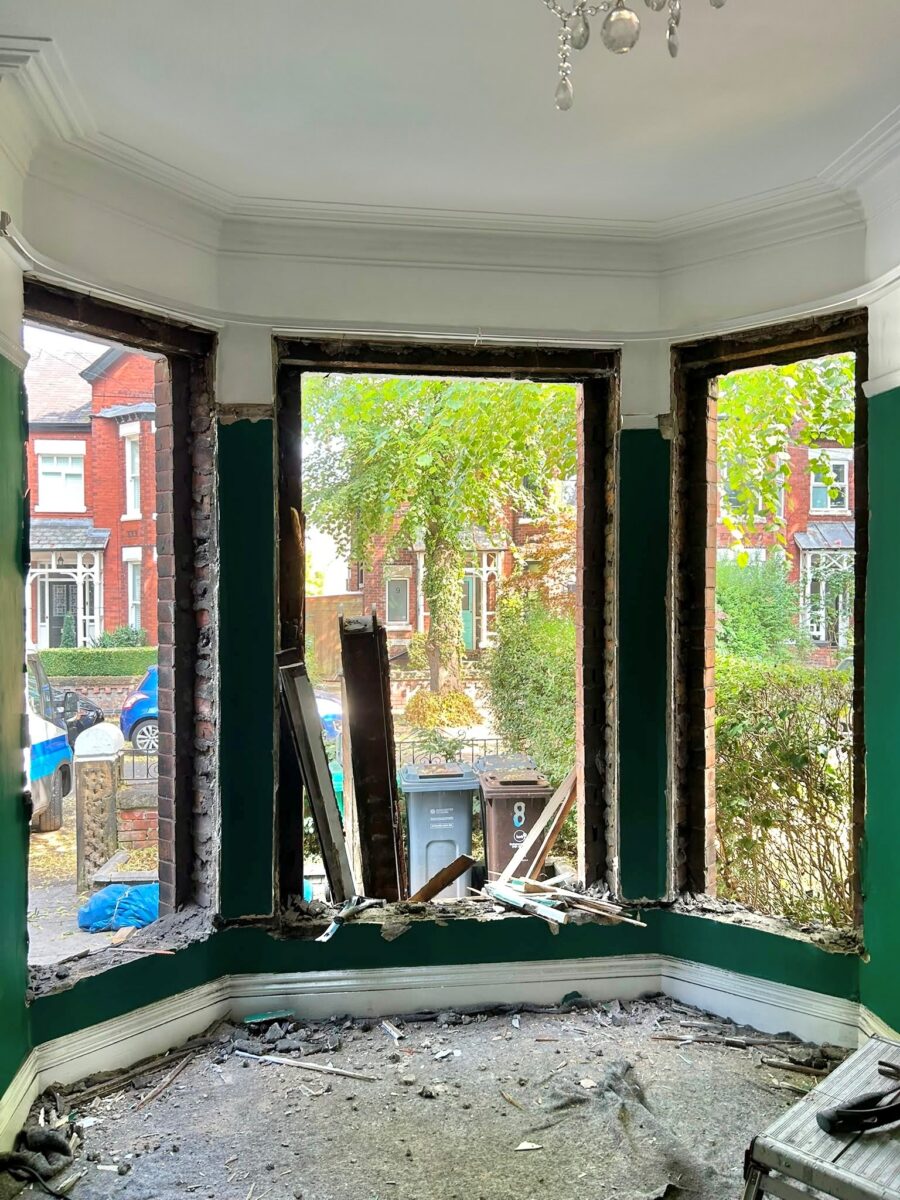
Our recommendation was to remove the complete original timber box sash windows, expose the full openings and install the replacement windows properly rather than simply treating the project as an insert replacement.
Once the new windows were installed, we fitted new timber internal architraves around them.
When comparing quotes, ask:
What exactly are you removing?
What is staying in place?
How will the opening be finished internally?
Two companies can appear to be quoting for the same window replacement, but the work included can be very different.
4. Think about the inside of the house as well as the outside
A replacement window might look fantastic from the street but still feel wrong internally if the finishing detail doesn’t suit the property.
Romy wanted the inside of her home to retain its period feel as well.
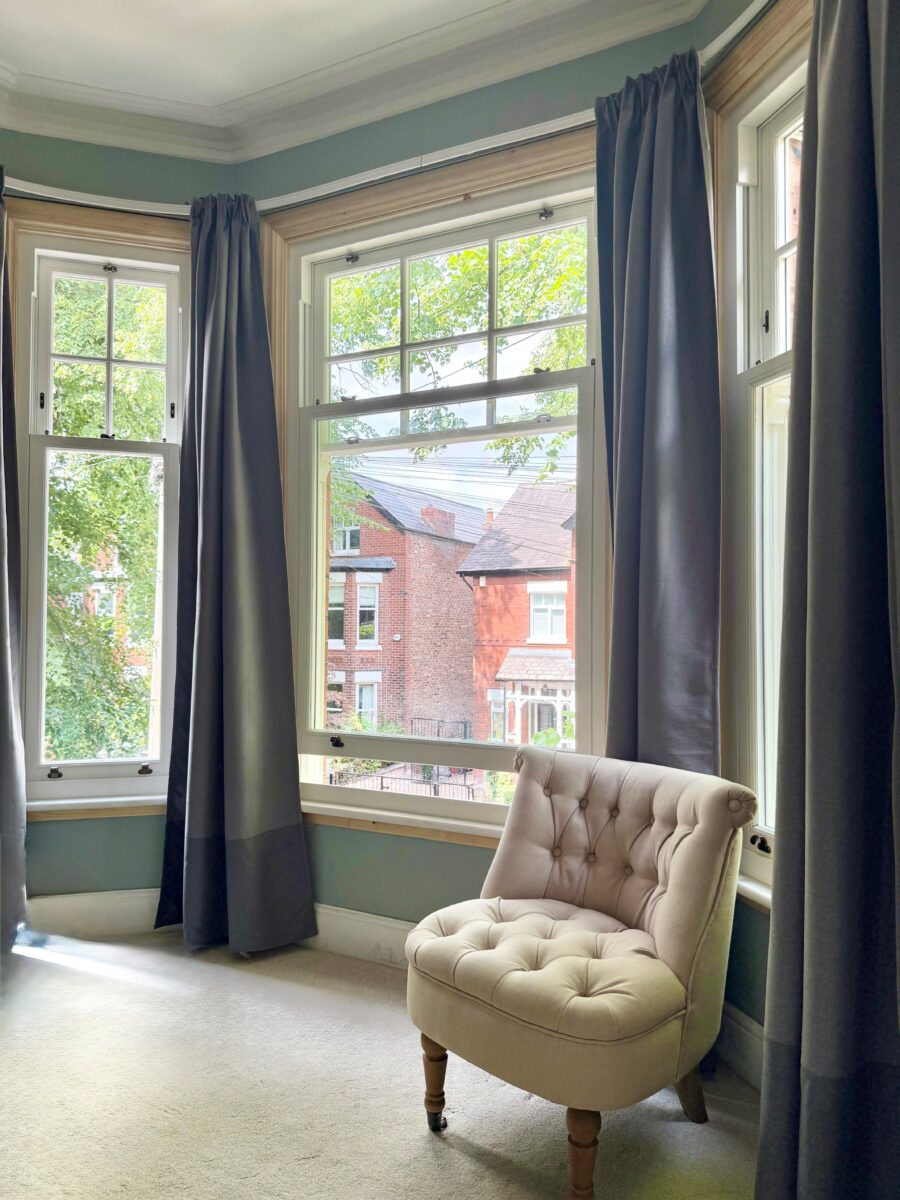
New timber architraves were therefore fitted around the replacement sash windows so the new installation worked naturally alongside the existing doors, skirting boards and joinery.
It is quite a simple detail, but it can completely change how finished the installation feels.
This is particularly important in older Chorlton homes where original internal features are often a significant part of the appeal.
5. Look carefully at the proportions
With period windows, small differences can have quite a big effect.
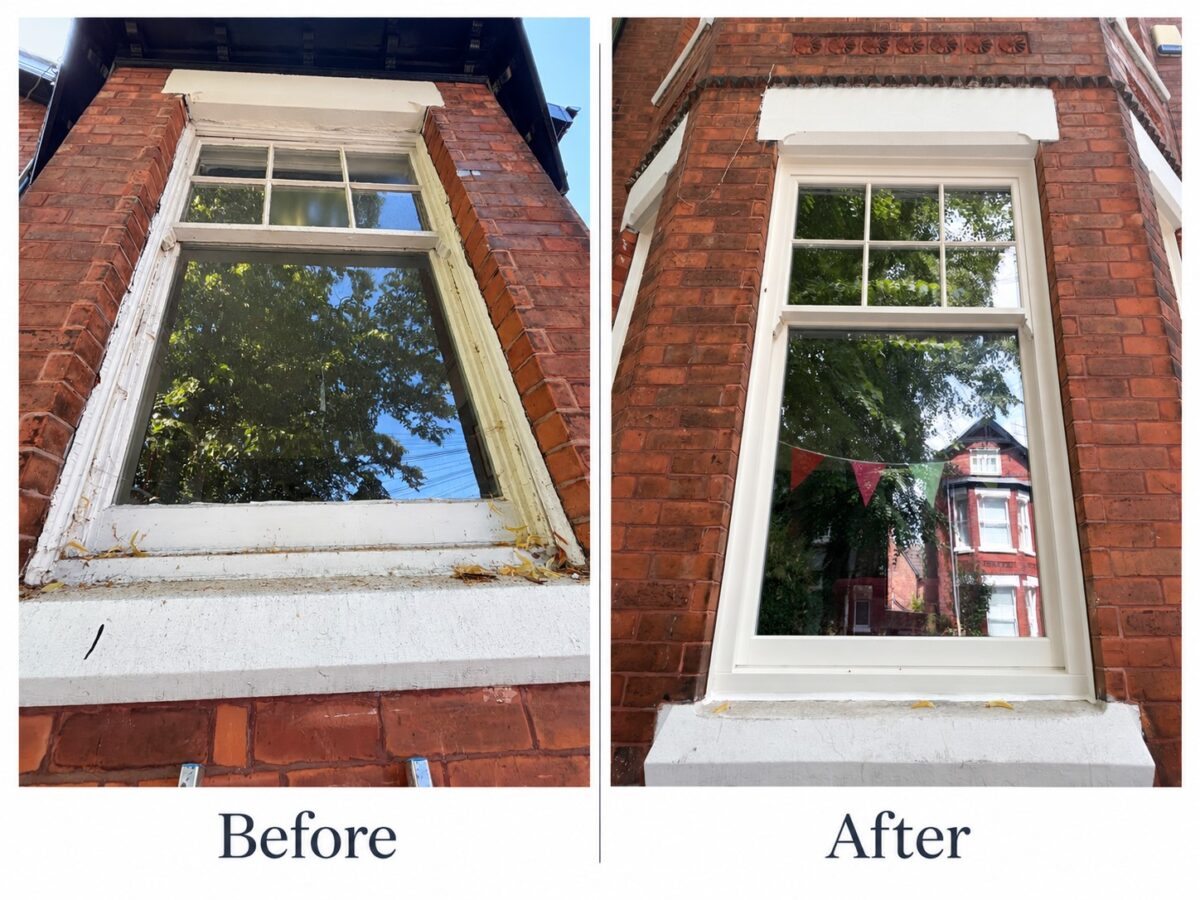
The amount of frame you see, the position of the sash, glazing bars and the overall proportions all contribute to whether a replacement window looks appropriate.
This is one reason I always recommend looking at photographs of complete installations rather than just a showroom sample.
A window can look great sitting on its own in a display.
The real test is how it looks once fitted into a Victorian or Edwardian bay alongside the brickwork and other architectural features of the house.
6. Don’t compare quotes purely on price
Eight quotations gave her plenty of opportunity to compare prices, but ultimately the decision wasn’t simply about finding the cheapest figure.
The product mattered.
The installation method mattered.
How the inside would be finished mattered.
And whether the company understood what she was trying to preserve mattered.
With windows, the finished product is a combination of what you buy and how it is fitted.
The lowest quote can therefore be difficult to judge unless you understand exactly what is included.
My advice would always be to make companies explain the installation in plain English before you compare the final figures.
7. Look at real projects on homes similar to yours
For homeowners, this is probably one of the easiest ways to narrow down your options.
If you own a period house in Chorlton, ask to see other period houses in Chorlton.
If you have original sash windows, look at completed sash window replacements.
And ideally look at the before photographs as well as the finished result.
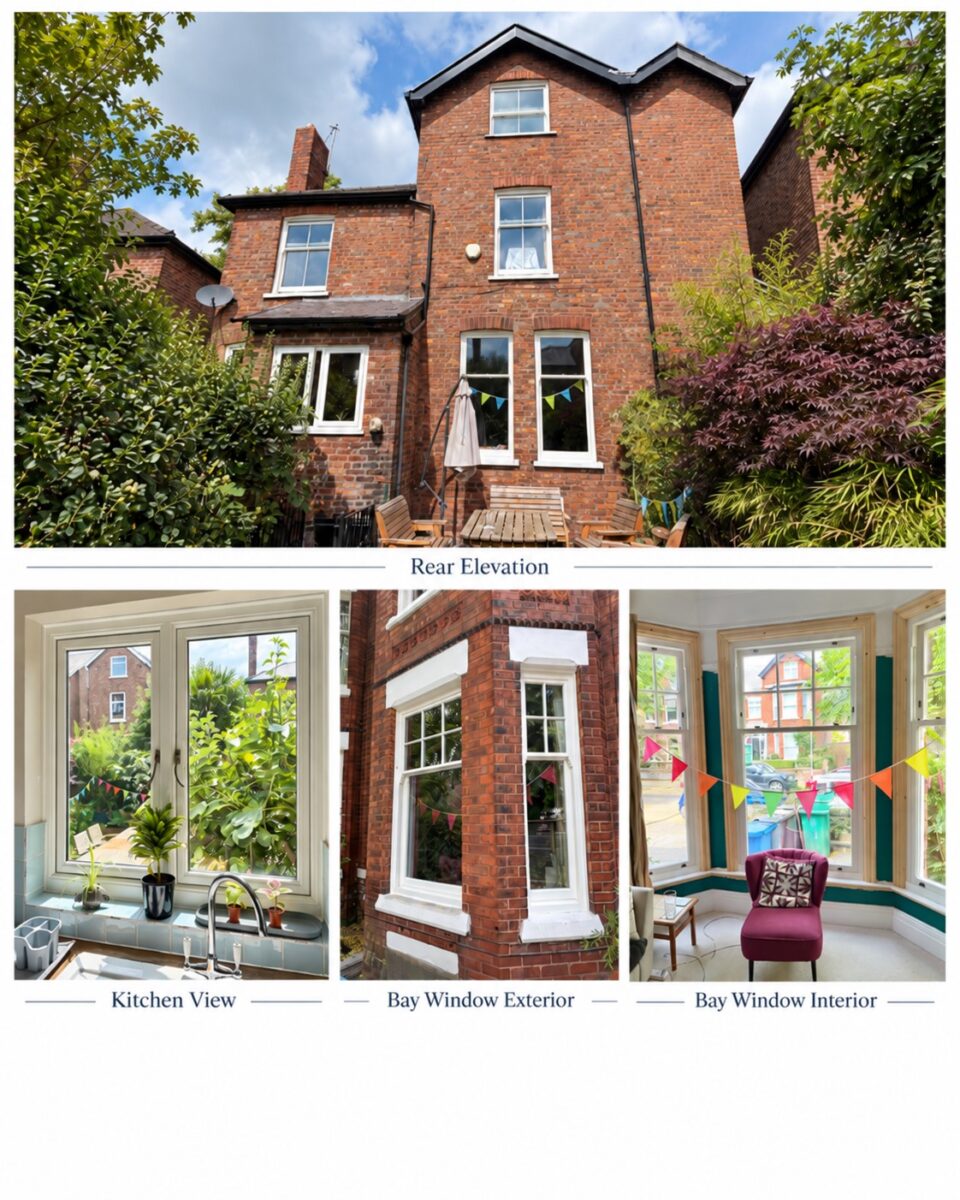
Our recent Chorlton sash window project is a useful example because it shows the entire process rather than simply the finished windows.
You can see the condition of the original timber windows, the complete removal of the box sashes, the exposed openings, the new windows being installed and the final internal and external finish.
You can also see how the original stained glass was retained.
For somebody considering a similar job, I think that is far more useful than looking at a manufacturer’s brochure.
Improving a period home doesn’t mean removing its character
Older properties inevitably need updating.
Windows eventually deteriorate, heating expectations change and homeowners understandably want better security, easier maintenance and a more comfortable home.
But improving those things doesn’t necessarily mean removing everything that was there before.
On Romy’s Chorlton project, the original timber windows had reached the point where replacement was necessary.
The aim was therefore to retain the appearance and details that mattered, rather than trying to preserve windows that were no longer practical.
The new Roseview sash windows gave her the traditional look she wanted.
The original stained glass remained part of the house.
The timber architraves retained the period feel internally.
And, perhaps most importantly for Romy, the windows could actually be opened again.
For me, that is what a successful period-property renovation should achieve.
It should improve how the house works without unnecessarily taking away what made you like the house in the first place.
About Wayne Shaw
Wayne Shaw is Managing Director of The Window Company, a family-run window, door and conservatory installer established in 1988 and based in Stretford, Manchester.
The company installs throughout Chorlton, Didsbury, Sale, Altrincham, Stretford and the wider South Manchester and Cheshire area, using its own directly employed installation teams.
Eddie – Wednesday 23rd September 2026. (Text and images supplied by Wayne).